Conclusions and Future Trends
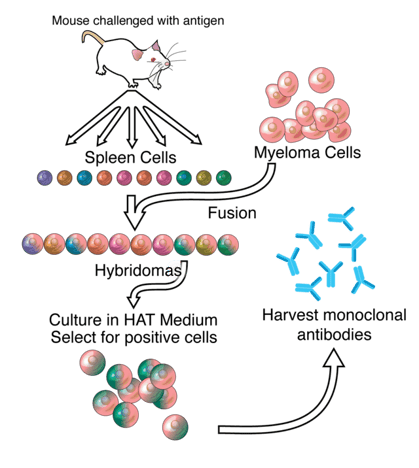
Hybridoma technology is pivotal in monoclonal antibody production for research, diagnostics, and therapeutic applications. Stringent quality control measures, including mycoplasma testing, monoclonal verification, and optimization of antibody yield, are essential for ensuring the reliability and effectiveness of monoclonal antibodies. Best practices, such as proper cryopreservation, meticulous record-keeping, and adherence to regulatory standards, further support high-quality monoclonal antibody production.
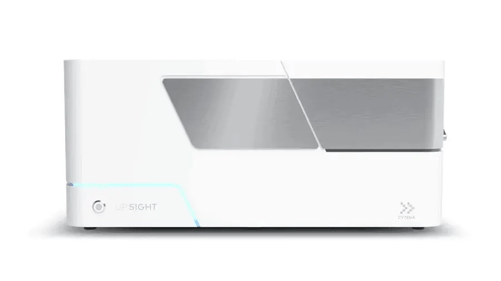
Advancements in automation and next-generation sequencing will likely play increasingly important roles in overcoming the challenges associated with hybridoma technology. Automated tools like
CYTENA’s UP.SIGHT is already proving invaluable in enhancing process consistency and efficiency. As the demand for monoclonal antibody production continues to grow, ongoing innovation in these areas will be crucial in maintaining the efficiency of hybridoma technology.
Ready to take the lead in monoclonal antibody production?
Book a demo for the UP.SIGHT today!
References
- Antibody therapeutics approved or in regulatory review in the EU or US. (n.d.). The Antibody Society. Retrieved August 22, 2024, from https://www.antibodysociety.org/resources/approved-antibodies/
- Babrak, L., McGarvey, J. A., Stanker, L. H., & Hnasko, R. (2017). Identification and verification of hybridoma-derived monoclonal antibody variable region sequences using recombinant DNA technology and mass spectrometry. Molecular Immunology, 90, 287–294. https://doi.org/10.1016/j.molimm.2017.08.014
- Bradbury, A. R. M., Trinklein, N. D., Thie, H., Wilkinson, I. C., Tandon, A. K., Anderson, S., Bladen, C. L., Jones, B., Aldred, S. F., Bestagno, M., Burrone, O., Maynard, J., Ferrara, F., Trimmer, J. S., Görnemann, J., Glanville, J., Wolf, P., Frenzel, A., Wong, J., … Dübel, S. (2018). When monoclonal antibodies are not monospecific: Hybridomas frequently express additional functional variable regions. mAbs, 10(4), 539–546. https://doi.org/10.1080/19420862.2018.1445456
- Castillo, F. J., Mullen, L. J., Grant, B. C., DeLeon, J., Thrift, J. C., Chang, L. W., Irving, J. M., & Burke, D. J. (1994). Hybridoma stability. Developments in Biological Standardization, 83, 55–64.
- Fratz‐Berilla, E. J., Angart, P., Graham, R. J., Powers, D. N., Mohammad, A., Kohnhorst, C., Faison, T., Velugula‐Yellela, S. R., Trunfio, N., & Agarabi, C. (2020). Impacts on product quality attributes of monoclonal antibodies produced in CHO cell bioreactor cultures during intentional mycoplasma contamination events. Biotechnology and Bioengineering, 117(9), 2802–2815. https://doi.org/10.1002/bit.27436
- Fuller, S. A., Takahashi, M., & Hurrell, J. G. R. (1988). Freezing and Recovery of Hybridoma Cell Lines. Current Protocols in Molecular Biology, 1(1), 11.9.1-11.9.3. https://doi.org/10.1002/0471142727.mb1109s01
- Köhler, G., & Milstein, C. (1975). Continuous cultures of fused cells secreting antibody of predefined specificity. Nature, 256(5517), 495–497. https://doi.org/10.1038/256495a0
- Mitra, S., & Tomar, P. C. (2021). Hybridoma technology; advancements, clinical significance, and future aspects. Journal of Genetic Engineering and Biotechnology, 19(1), 159. https://doi.org/10.1186/s43141-021-00264-6
- MonoclonalAntibodies, N. R. C. (US) C. on M. of P. (1999). Large-Scale Production of Monoclonal Antibodies. In Monoclonal Antibody Production. National Academies Press (US). https://www.ncbi.nlm.nih.gov/books/NBK100189/
- Moraes, J. Z., Hamaguchi, B., Braggion, C., Speciale, E. R., Cesar, F. B. V., Soares, G. D. F. D. S., Osaki, J. H., Pereira, T. M., & Aguiar, R. B. (2021). Hybridoma technology: Is it still useful? Current Research in Immunology, 2, 32–40. https://doi.org/10.1016/j.crimmu.2021.03.002
- Mycoplasma testing. (n.d.). Culture Collections. Retrieved August 22, 2024, from https://www.culturecollections.org.uk/services/mycoplasma-testing/
- Nikfarjam, L., & Farzaneh, P. (2012). Prevention and detection of Mycoplasma contamination in cell culture. Cell Journal, 13(4), 203–212.
- Parray, H. A., Shukla, S., Samal, S., Shrivastava, T., Ahmed, S., Sharma, C., & Kumar, R. (2020). Hybridoma technology a versatile method for isolation of monoclonal antibodies, its applicability across species, limitations, advancement and future perspectives. International Immunopharmacology, 85, 106639. https://doi.org/10.1016/j.intimp.2020.106639
- Riba, J., Schoendube, J., Zimmermann, S., Koltay, P., & Zengerle, R. (2020). Single-cell dispensing and ‘real-time’ cell classification using convolutional neural networks for higher efficiency in single-cell cloning. Scientific Reports, 10(1), 1193. https://doi.org/10.1038/s41598-020-57900-3
- The Nobel Prize in Physiology or Medicine 1984. (n.d.). NobelPrize.Org. Retrieved August 22, 2024, from https://www.nobelprize.org/prizes/medicine/1984/summary/
- Todd, P. A., & Brogden, R. N. (1989). Muromonab CD3. A review of its pharmacology and therapeutic potential. Drugs, 37(6), 871–899. https://doi.org/10.2165/00003495-198937060-00004
- Wohlenberg, O. J., Kortmann, C., Meyer, K. V., Schellenberg, J., Dahlmann, K., Bahnemann, J., Scheper, T., & Solle, D. (2022). Optimization of a mAb production process with regard to robustness and product quality using quality by design principles. Engineering in Life Sciences, 22(7), 484–494. https://doi.org/10.1002/elsc.202100172
- World Health Organization. (2022). Guidelines for the production and quality control of monoclonal antibodies and related products intended for medicinal use. https://cdn.who.int/media/docs/default-source/biologicals/final-who-guidelines-on-mab-production-and-quality-control-annex-4—7-jun-2022.pdf?sfvrsn=8c542f00_1&download=true
- Yamaguchi, K., Ogawa, R., Tsukahara, M., & Kawakami, K. (2023). Efficient production of recombinant proteins in suspension CHO cells culture using the Tol2 transposon system coupled with cycloheximide resistance selection. Scientific Reports, 13(1), 7628. https://doi.org/10.1038/s41598-023-34636-4